The light your cells respond to.
Red Light Therapy — or photobiomodulation — uses specific wavelengths of red and near-infrared light, chosen for how deeply they reach and how your cells respond. At Rebalance it's delivered inside a guided wellbeing pathway, never as a standalone gimmick.
- 60-min appointment, incl. 15-min light session
- No heat discomfort during your session
- Straight back to your day afterwards
- Suitability assessed before you start
What is Red Light Therapy?
Red Light Therapy, also known as photobiomodulation (PBM), is a light-based approach using specific wavelengths of red and near-infrared light. These wavelengths are chosen for one reason: how they're absorbed by living tissue, and how far they travel into it. Two wavelengths do most of the work — visible red at around 660 nm, and near-infrared at around 808 nm.
How it works, at a cellular level
The mechanism is well described and refreshingly simple to follow. It comes down to light, mitochondria, and energy.
Light is absorbed
Red and near-infrared wavelengths reach the skin and the cells beneath it, where they're absorbed rather than reflected away.
Mitochondria respond
Inside your cells, structures called mitochondria absorb this light energy. They're the part of the cell responsible for producing usable energy.
Energy is supported
This may support the efficiency of ATP production — the molecule cells use for energy — which in turn plays a supportive role in cellular function, repair and maintenance.
Two wavelengths, two depths
Different wavelengths reach different depths. That's the whole point of combining them — red works nearer the surface, near-infrared travels deeper.
Nearer the surface
Visible red light is absorbed closer to the skin. It's the wavelength most people explore for skin vitality and surface-level cellular support.
Reaches deeper
Invisible to the eye, near-infrared reaches further into the body. On the MOVE+ it's carried by lasers rather than LEDs, which is what lets it travel deeper into tissue.
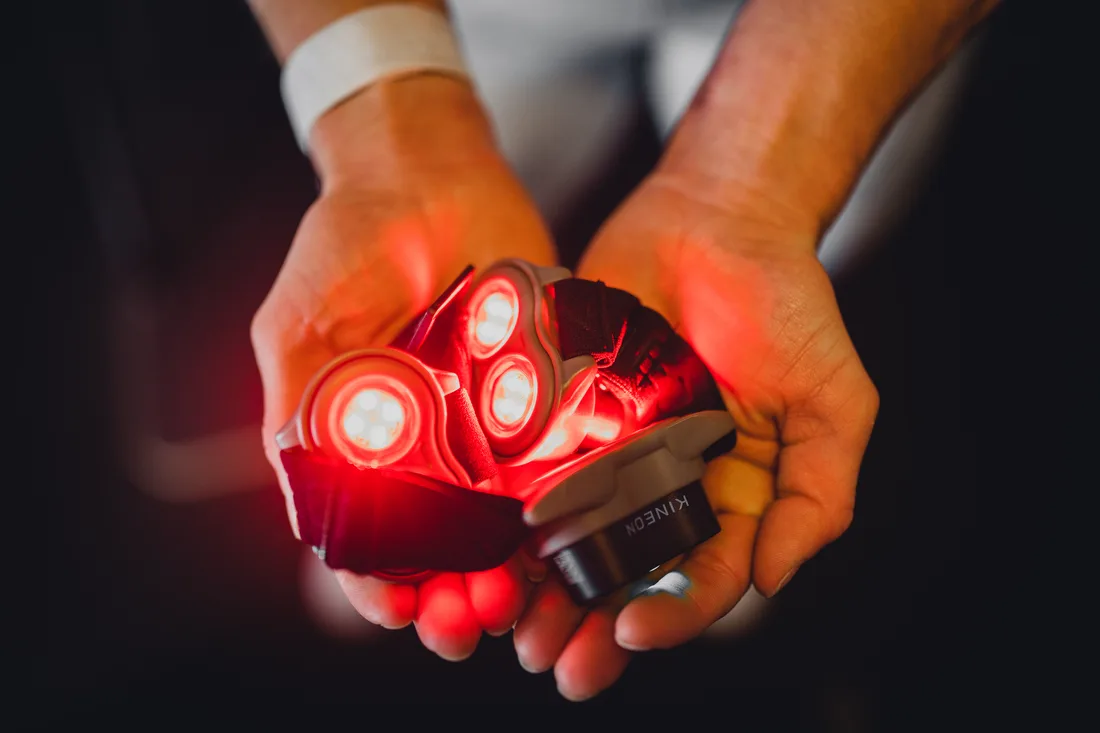
Meet the Kineon MOVE+
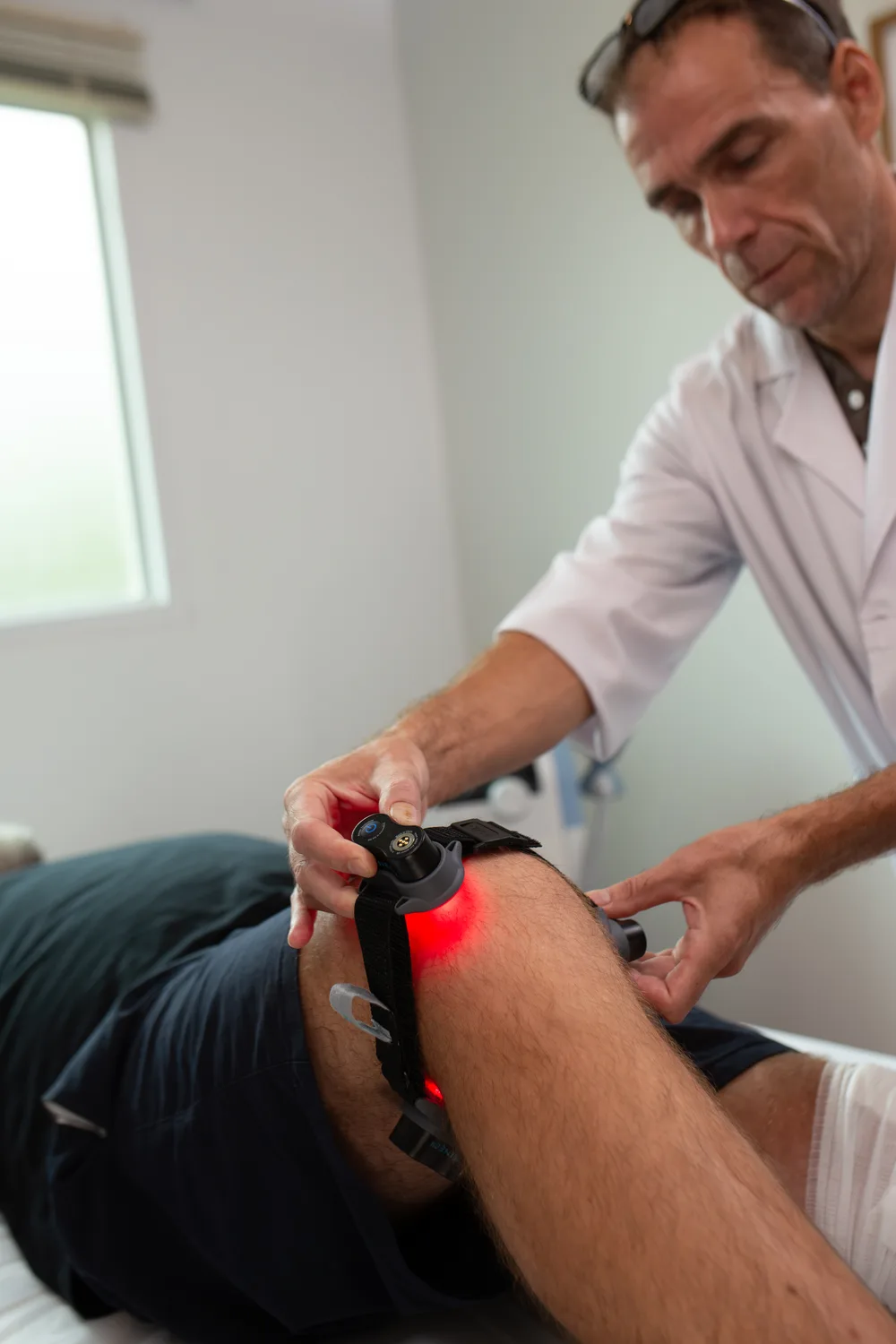
Rather than a fixed panel you sit in front of, we use a wearable device that wraps the area being worked on — so the light sits right against the skin, where it's meant to be.
Laser and LED, not LED alone
The MOVE+ pairs deep-red LEDs with near-infrared lasers across three modules. The LEDs work nearer the surface; the lasers carry the deeper 808 nm wavelength further into tissue — which is what sets it apart from devices that rely on LEDs alone.
- 660 nm — deep-red LEDs
- 808 nm — near-infrared lasers
- Wearable, wraps the area
- 15-minute light sessions
- Class 1 lasers
The manufacturer specifies the near-infrared lasers reach roughly 5–6 cm into tissue. We apply it to a target area as part of your plan — matched to your goals, never a fixed dose for everyone.
Not all red light is the same
Plenty of red light products are LED panels built for broad, surface-level use. The MOVE+ is a different kind of device — which is part of why we chose it for the pathway here.
Why people explore Red Light Therapy
People come to it for different reasons. These are the most common areas of interest — offered as supportive approaches, not as remedies for any specific condition.
Recovery support
An adjunct approach to support the body's natural recovery processes after physical activity or during demanding periods.
Muscle & tissue support
Red and near-infrared light may support muscle and tissue wellbeing as part of a structured support plan.
Skin wellbeing
Some people explore it for its potential role in supporting skin vitality and cellular function.
Overall vitality
As part of a proactive approach to wellbeing — supporting energy and resilience over time.
Who it may suit
Red Light Therapy tends to fit people who recognise themselves here. We assess everyone individually, so take this as a starting point.
Exploring adjunct approaches
You want a supportive, non-invasive option that sits alongside a structured wellbeing plan rather than replacing anything.
Proactive about self-care
You're focused on general wellbeing and resilience, and you'd rather invest in it consistently than react later.
Complementing other therapies
You're already exploring HBOT or another programme at Rebalance and want red light woven into the same plan.
Active & training
You train or stay active and want recovery support built into a sensible, repeatable routine.
What a session is like
Your appointment runs 60 minutes — an unhurried consultation and review around a focused 15-minute light session. Here's how it runs.
Suitability review
We confirm red light therapy is appropriate for your goals and circumstances before any session.
Settle in
The device is positioned around the target area and you get comfortable before the session begins.
Relax
You simply rest while the light is applied for 15 minutes. There's no heat discomfort — most people find it pleasant.
Back to your day
No downtime. You can return to your normal activities immediately afterwards.
Delivered properly, inside a plan
Red Light Therapy at Rebalance is offered as part of a wider wellbeing pathway, not as a standalone service — so it's matched to your goals, not sold in isolation.
Clinician-led care
Suitability is reviewed and overseen by registered healthcare professionals. Honest advice comes first.
The Kineon MOVE+
We use the Kineon MOVE+, a wearable red-light-and-laser device with an established safety profile, applied to a target area as part of your plan.
Community-owned
We're a Community Interest Company. Any surplus is reinvested into local wellbeing projects, not shareholders.
Frequently asked questions
What exactly is Red Light Therapy?
Red Light Therapy, also known as photobiomodulation, uses specific wavelengths of red and near-infrared light to interact with cells at a deeper level, potentially supporting cellular energy production and tissue wellbeing.
What does a session feel like?
Most people find it comfortable and relaxing. There's no significant heat and the experience is generally pleasant.
How long is a session?
Your appointment is 60 minutes, which includes a focused 15-minute light session alongside time to settle in, review and ask questions. There is no downtime, so you can return to normal activities straight afterwards.
Is it safe?
Red Light Therapy is generally well-tolerated. We use the Kineon MOVE+, a device with an established safety profile. Suitability is assessed before sessions begin, and it may not be appropriate for everyone.
Do I need an assessment first?
Yes. We assess suitability before recommending Red Light Therapy, so it's matched to your goals and circumstances. To arrange a session, call 01865 648985 or email rebalance@healthandwellbeinghub.uk.
How many sessions might I need?
It depends on your individual goals and support plan. Some people explore a short course, while others integrate it into ongoing wellbeing support. We talk this through during your review.
What are 660 nm and 808 nm?
They are the two wavelengths the MOVE+ uses. 660 nm is visible red light, absorbed nearer the surface; 808 nm is near-infrared, invisible to the eye and — delivered by lasers rather than LEDs — able to reach deeper into tissue. Combining them covers both surface and deeper areas.
Well-tolerated — and always assessed first.
Red Light Therapy using red and near-infrared wavelengths is generally well-tolerated when used as directed. It may not be suitable for everyone, so we always conduct a suitability assessment before recommending sessions.
See whether red light therapy fits your plan.
Book a session and we'll help you decide whether it's a good fit for your goals.