
Give your body more of what it runs on: oxygen.
A 60-minute session inside a gently pressurised chamber, where more oxygen can dissolve into your blood and reach the tissues that need it. Delivered as part of a guided wellbeing pathway — led by certified practitioners and screened for safety before you start.
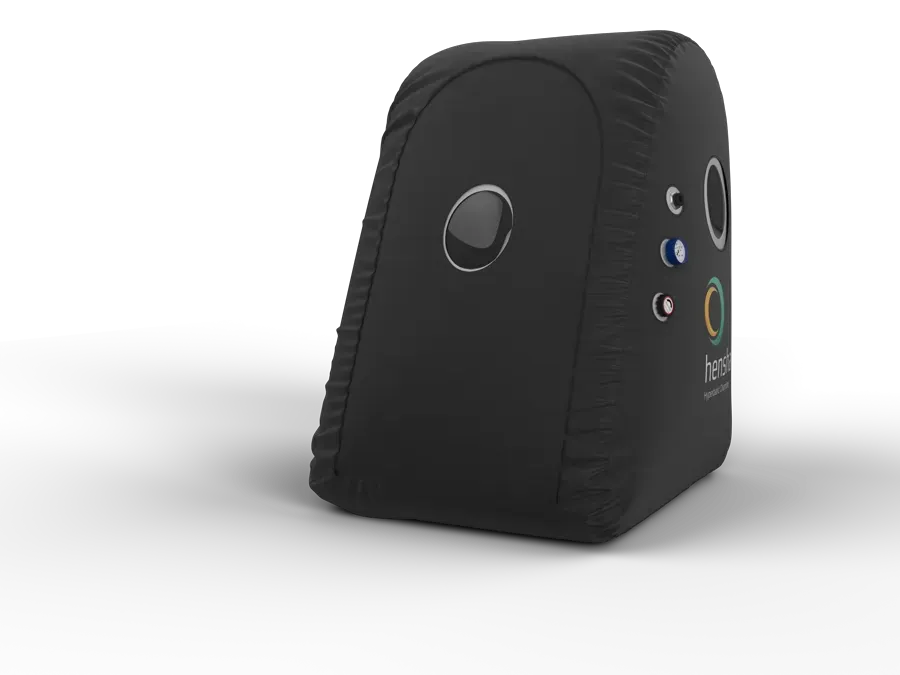
60-minute session · first visit · limited slots
Book your sessionNo lock-in. Suitability screened first.
People come to oxygen therapy for different reasons
It tends to suit you if you recognise yourself in one of these. We assess everyone individually, so this is a starting point — not a promise.
Recovering from a demanding period
You want gentle, structured support for your body's own recovery processes after illness, injury or burnout.
Training hard, recovering smart
You're active or in training and want recovery support built into a sensible, structured routine.
Proactive about wellbeing
You'd rather invest in resilience and vitality now than wait until something forces your hand.
Supporting healthy ageing
You want to maintain energy and resilience over time as part of a wider wellbeing programme.
Start low-risk. Save when you commit to a course.
Begin with the introductory session. If it's right for you, a structured course brings the per-session price right down — these are recommended after your screening and review, not before.
Start here
Introductory session
60 minutes · first visit · normally £75
Your full first session at a reduced price. Includes screening and a post-session review, so you leave knowing whether it's worth continuing.
Book your £49 sessionSingle session
60–90 minutes
A standard one-off session once you've completed your first visit and screening.
Book a single sessionGo further & save — session courses
10-session course
£65 per session · vs £75 single
A structured block for people building oxygen therapy into a consistent routine over several weeks.
Enquire about 10 sessions20-session course
£50 per session · our lowest rate
The most committed option, at our lowest per-session price — for a sustained, structured approach to recovery and resilience.
Enquire about 20 sessionsHow hyperbaric oxygen therapy works
Oxygen is essential for cellular activity. Normally it's carried mostly by red blood cells. Inside a pressurised chamber, oxygen can dissolve more readily into your blood plasma and other body fluids — making more of it available to areas where circulation is reduced or demand is higher. Oxygen plays a supporting role in many of the body's natural processes. Individual responses vary, which is why we always assess suitability before recommending a course.
From physics to physiology — how pressure changes what oxygen can do in the body.
What actually happens
No surprises. Here's exactly how a session runs from the moment you arrive.
Screening & suitability
Before anything else, we check oxygen therapy is appropriate and safe for you.
Gentle pressurisation
Pressure rises slowly. You'll feel something like the ear-pressure on a flight — we guide you through it.
Relax & breathe
Once at pressure, simply rest and breathe normally. Read, listen to music, or close your eyes.
Gradual return
At the end, pressure returns to normal slowly and comfortably.
Post-session review
We check in, talk through how it felt, and plan your next step.
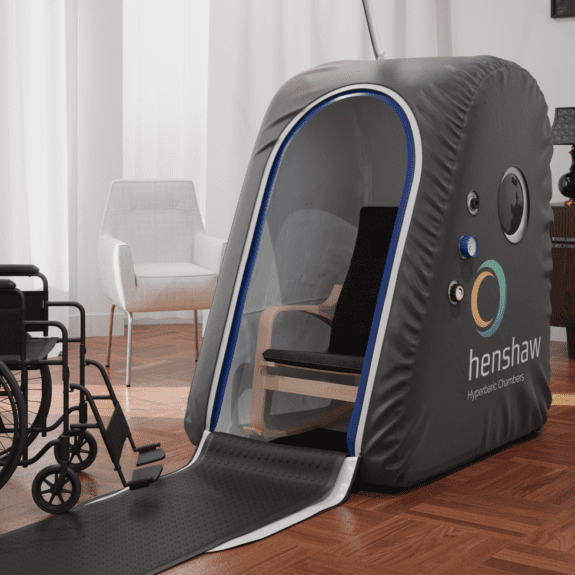
The Easy Access chamber
We use a professional soft-shell hyperbaric system chosen for comfort, safety and step-free access. The wide opening and level ramp make getting in and out genuinely easy — whatever your mobility.
- 1.4 ATA — gentle, mild pressure
- Step-free ramp access
- Clear viewing panels
Not a trend. A long, well-documented history.
Hyperbaric science has been studied and refined for the best part of a century. Here's the short version — from early pressurised structures to its place in modern wellbeing.
From bridge builders to modern medicine — a short history of hyperbaric oxygen.
Not a one-off oxygen pod. A supported pathway.
Certified practitioners
Sessions are screened and overseen by registered healthcare professionals. Safety and honest advice come first — always.
Part of a wider plan
Oxygen therapy sits inside assessment, review and ongoing support — not sold as an isolated, repeatable upsell.
Community-owned
We're a Community Interest Company. Any surplus is reinvested into local wellbeing projects — not paid to shareholders.
What oxygen therapy may support
Research into hyperbaric oxygen therapy continues to develop, and individual responses vary. Based on current understanding, more available oxygen may support:
Cellular energy
More available oxygen may support the body's natural energy production at a cellular level.
Tissue support
Oxygen plays a role in the body's natural tissue maintenance as part of a wider support strategy.
Circulation support
Dissolved oxygen in plasma may support oxygen delivery to areas of higher demand.
Recovery processes
May support the body's own recovery processes within a structured wellbeing pathway.
Frequently asked questions
What is hyperbaric oxygen therapy?
HBOT is a painless, non-invasive oxygen therapy. You spend time resting in a specially designed pressurised chamber while breathing oxygen. The higher pressure changes the way oxygen behaves in the body, allowing more of it to dissolve into your blood and fluids.
What does a session feel like?
The start and end feel a little like an aeroplane taking off or landing — a sense of fullness or popping in your ears as pressure changes. This usually settles within 10–15 minutes, and our team guides you through simple ways to ease it. Once at pressure, most people relax, breathe normally, and often feel pleasantly sleepy.
What might oxygen therapy support?
By allowing more oxygen to dissolve into your blood and fluids, HBOT may support the body's natural processes — including cellular energy production, tissue support, circulation, and the body's own recovery processes. Responses vary between individuals, and oxygen therapy is offered as part of a wider wellbeing approach rather than as a remedy for any specific condition.
Is it safe?
Our chambers operate at a mild pressure and include built-in safety features. Side effects are uncommon, though it's normal to feel slightly tired afterwards. Your suitability is reviewed in detail at your initial assessment, and our team stays with you throughout.
Will I feel claustrophobic?
The chamber has clear viewing panels designed to keep the space feeling open. You are never locked in, and the chamber can be opened in around 30 seconds at any point. Most people find the experience calm and restful.
How long is a session?
A typical session lasts between 60 and 90 minutes, depending on your plan. Your introductory session runs for 60 minutes.
Do I need an assessment first?
Yes. An initial screening makes sure oxygen therapy is safe and suitable for you before you begin — it's not optional, and it's part of your introductory session. To arrange one, call 01865 648985 or email rebalance@healthandwellbeinghub.uk.
Can anyone have HBOT?
No — oxygen therapy isn't suitable in every situation, so suitability is always assessed before sessions begin. If it isn't the right fit for you, we'll tell you honestly and, where helpful, signpost you elsewhere.
Which chamber do you use?
We use a professional soft-shell Easy Access chamber operating at 1.4 ATA — a mild, gentle pressure with step-free ramp access and clear viewing panels, designed to be comfortable whether or not you have tried HBOT before.
Screening isn't a hurdle. It's the care.
HBOT isn't suitable for everyone, which is why screening is an essential first step. During your screening we'll talk through your background, your goals, and anything that may affect suitability — so you start with confidence, or not at all.
Try it for £49 before you decide anything else.
One 60-minute session, fully screened, with a review at the end. Limited introductory slots each week.